
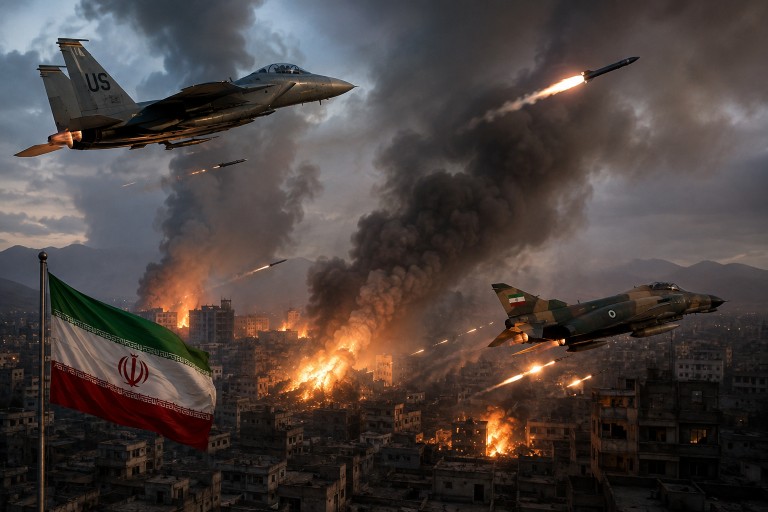
The United States and Iran have engaged in a fresh exchange of airstrikes, intensifying fears of a potential escalation into open conflict in the Middle East. In response to perceived threats to commercial shipping in the Strait of Hormuz and against American personnel, the U.S. military targeted sites connected to Iran’s Islamic Revolutionary Guard Corps (IRGC). Iran, in retaliation, launched missile and drone attacks against U.S. interests across the region, impacting countries such as Jordan, Bahrain, Kuwait, and Iraq.
Jordan’s military reported intercepting 10 ballistic missiles fired from Iran, with three additional missiles landing in uninhabited areas. There were no immediate reports of casualties or direct strikes on the U.S. military training facility there. Meanwhile, Iran claimed responsibility for attacks on a U.S. base near Erbil in Iraq, and missile and drone activities were observed in Kuwait, while air-raid sirens were set off in Bahrain.
This escalation has put the security of the Strait of Hormuz—a vital conduit for global oil transits—at risk, causing oil prices to climb. Iran has issued a warning that it might block oil exports from the Gulf if the United States increases military or economic pressure. Iranian leaders have condemned the latest U.S. strikes, with President Masoud Pezeshkian signaling a readiness to reciprocate should the U.S. revert to commitments from a previous memorandum designed to de-escalate tensions.
As both sides issue warnings of further retaliatory measures, the situation remains fraught. U.S. President Donald Trump has threatened a more robust response if Iran continues its offensive, while Iranian officials maintain they will use both military and diplomatic channels to safeguard their interests. This confrontation follows a period where the focus had shifted away from direct combat to sanctions and economic tactics, raising concerns that efforts to contain the conflict might unravel, potentially leading the region back into sustained military engagement.