
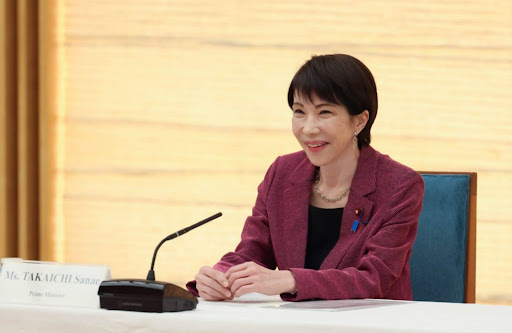
Japan has announced an unprecedented release of oil from its strategic reserves, as Prime Minister Sanae Takaichi warned of potentially prolonged disruption to tanker traffic through the Strait of Hormuz. Around 80 million barrels — equivalent to 45 days of domestic demand — will be distributed to refiners starting this week. A separate release of 15 days’ worth of private-sector stocks had already been approved. The moves reflect deep anxiety in Tokyo about the consequences if the Strait of Hormuz remains blocked due to the ongoing US-Israel war on Iran.
Japan’s dependence on Middle Eastern crude is near-absolute, with more than 90% of imports originating from the region. The Strait of Hormuz is the sole maritime route through which this oil reaches Japan, making the waterway a critical national interest. Takaichi told US President Trump that Japan cannot send military forces to the region under its pacifist constitution, and instead pledged intensive diplomacy with key regional and international partners. This approach has defined Tokyo’s broader posture in the crisis.
The 80 million barrel release is the largest in Japan’s history, surpassing the emergency response to the 2011 Fukushima nuclear meltdown by 1.8 times. Japan’s remaining reserves of approximately 470 million barrels represent 254 days of domestic consumption, providing significant cushion. Government officials have characterised the release as prudent and proportionate to the scale of the threat. They emphasised that Japan’s reserve position remains strong even after this drawdown.
The government has also capped retail gasoline prices at ¥170 per litre after they hit an all-time high of ¥190.8. Weekly subsidy reviews will allow the policy to adapt as oil prices shift. These direct consumer protections are intended to prevent inflationary energy costs from causing wider economic damage. The fuel subsidy programme represents one of the most direct forms of government intervention in Japan’s retail energy market in recent memory.
Concern about toilet paper and other household goods shortages has spread through social media, prompting intervention from the trade ministry. Officials clarified that 97% of Japan’s toilet paper is produced domestically from recycled materials not connected to Middle Eastern oil. The paper industry association said supply chains are functioning normally and producers can increase output if demand warrants. Tokyo is urging citizens to focus on factual information and avoid panic purchases that could create artificial shortages.