
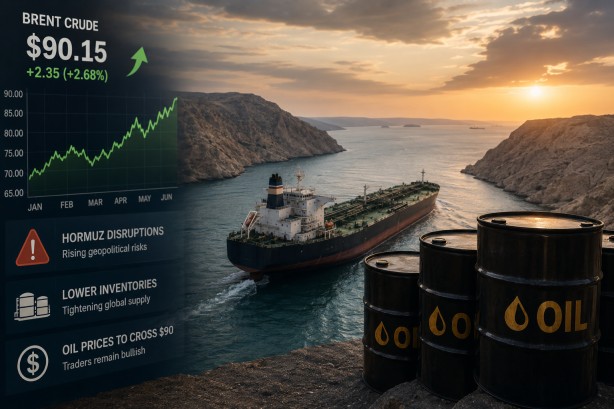
Oil prices have surged significantly, marking their largest weekly increase since April, yet experts suggest that Brent crude will require either an extended disruption in the Strait of Hormuz or evident signs of decreased global supplies to surpass the $90 per barrel threshold.
As of Friday, Brent crude hovered around $85 following an approximate 11% gain over the week, while the U.S. benchmark, West Texas Intermediate, edged closer to $80. This rise in prices has been driven by renewed tensions between the United States and Iran, impacting supply routes in the Middle East and decreasing tanker traffic through the crucial Strait of Hormuz.
Despite these rising regional tensions, Brent crude has not managed to exceed this week’s peak of $87.55 per barrel. Market analysts indicate that traders are still anticipating diplomatic measures to avert a sustained crisis. The Strait of Hormuz remains a focal point for energy markets, as approximately 20% of the global oil supply transits this passage. Tanker operations have decelerated, with shipping companies vigilantly observing the security situation.
The effects of this situation are already visible in fuel markets. In the U.S., refining margins have increased due to tightening diesel and gasoline supplies, while European fuel markets are also encountering heightened pressure. Compounding these concerns, additional disruptions to Russian oil exports have intensified worries about global supply constraints.
Analysts maintain that for oil prices to decisively rise above $90, there must be a significant decline in inventories or an escalation in tensions between Washington and Tehran, potentially leading to a prolonged disruption of shipping through the Strait of Hormuz. In the meantime, traders are keeping a close watch on diplomatic developments and supply data, which are expected to dictate the next significant shift in global oil markets.