
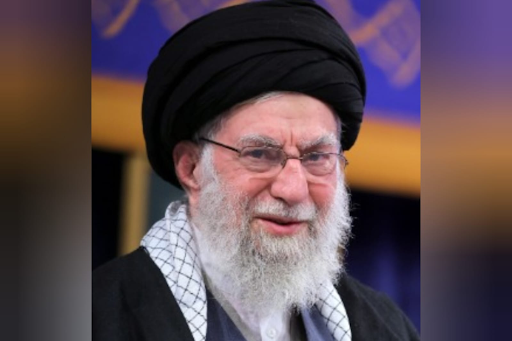
The death of Iran’s Supreme Leader in joint US-Israeli airstrikes has plunged the Islamic Republic into a period of deep uncertainty, even as its military and security institutions continue to function. The country’s vast armed forces, including the powerful Islamic Revolutionary Guard Corps, remain intact and committed to continuing the conflict in the Persian Gulf region.
Two weeks before his death, a state television journalist accidentally said “death to Khamenei” instead of “death to America” during a live broadcast, a telling slip that reflected widespread disillusionment with a leader who had ruled for nearly four decades. The incident cost the journalist his job but underscored the extent to which the Supreme Leader had become a symbol of resentment for many Iranians.
Despite some celebrations on social media following the announcement of his death, there is little sign of any coordinated effort to overthrow the government. Security forces have flooded the streets of Tehran and other major cities, with reports of large numbers of paramilitaries and armed police maintaining order throughout the country.
According to Iran’s constitution, a council comprising the president, the head of the judiciary, and a senior cleric will assume the Supreme Leader’s duties while the Assembly of Experts selects a permanent successor. Khamenei’s second-eldest son, Mojtaba, is frequently mentioned as a potential candidate in succession discussions.
The IRGC is expected to gain significantly more political power in the aftermath of the Supreme Leader’s death, potentially reshaping the balance of authority within the Islamic Republic. Meanwhile, questions are being raised about whether Iran’s longstanding nuclear policy, anchored in a religious edict against weaponization, will survive the leadership transition.